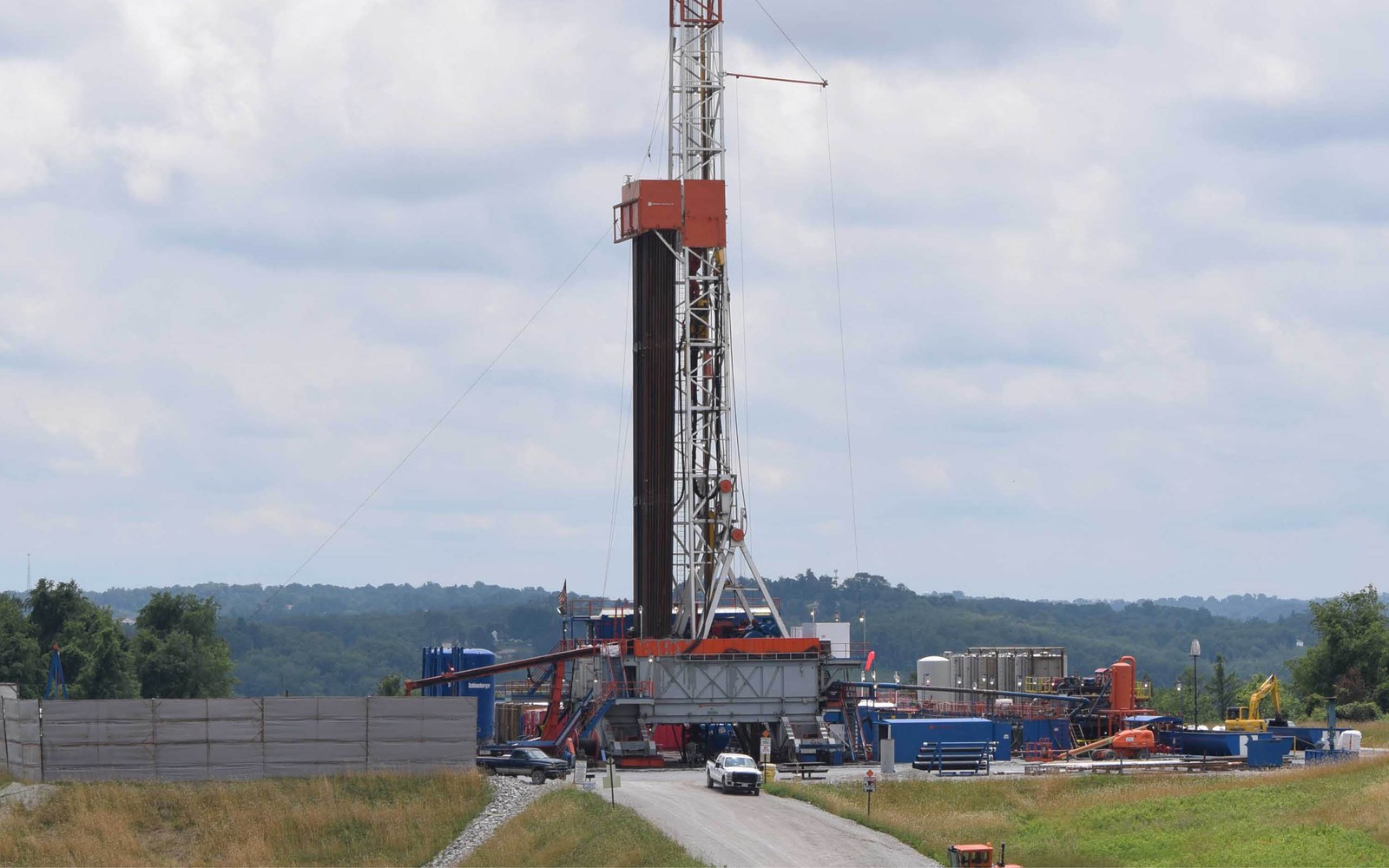
Utica Shale Mineral Rights
The Utica sits beneath the Marcellus across much of Ohio, and while the two plays share a region, they do not share a single valuation story.
The Utica Shale underlies much of eastern Ohio, extending into parts of Pennsylvania and West Virginia, sitting deeper than the overlying Marcellus and, in many areas, sharing the same well pads through stacked development. Eastern Ohio counties including Belmont, Monroe, and Guernsey sit in the play's liquids-rich window, where wells produce natural gas liquids alongside methane, while the play transitions to dry gas further west and to oil-prone characteristics in parts of central Ohio that never saw significant commercial development.
That window structure, similar in concept to the Eagle Ford's oil-condensate-gas transition, means a Utica Shale mineral interest's value depends heavily on precisely where your acreage sits within the play, beyond the simple fact that it produces from the Utica.
Liquids-rich core versus dry gas periphery
The strongest, most consistently drilled Utica acreage sits in the liquids-rich window across eastern Ohio's Belmont, Monroe, Guernsey, and Noble counties, where natural gas liquids revenue has historically supported stronger per-well economics than dry gas alone. Moving further from that core, the play transitions to dry gas, which behaves more like a straightforward Appalachian gas asset without the liquids upside.
A buyer should specify which window your tract sits in and price it accordingly, rather than applying a single Utica valuation across what is, in practice, a play with meaningfully different economics from county to county.
Stacked development with the Marcellus
In parts of eastern Ohio, operators have developed Marcellus and Utica intervals from shared well pads, since both formations can be economic in the same area. A mineral owner in one of these counties may hold interests in both formations, which a buyer should evaluate separately even when they are produced from adjacent wellbores, since the two shales have different depth, pressure, and cost profiles.
Operator consolidation in the play
Ascent Resources, EQT, and Encino Energy have been among the more significant operators in the Utica in recent years, with ownership of specific units shifting through acquisitions over the past decade. Confirming your current operator, rather than relying on an older division order, matters for understanding how actively your specific unit is likely to be developed going forward.
What a title check often reveals in this play
Utica leases signed during the play's early development years sometimes did not clearly separate rights to the overlying Marcellus, which can create ambiguity worth resolving before a sale, particularly on units where both formations are being developed from shared pads. A current title review, alongside your division order, helps a buyer price each formation's interest with the correct legal basis.
What a fair valuation accounts for in this play
A responsible buyer will specify whether your tract falls in the liquids-rich core, the transitional area, or the dry gas periphery, and price accordingly rather than applying one Utica-wide figure. Given how much natural gas liquids revenue can affect per-well economics in the core window, that distinction alone can meaningfully change what a fair offer looks like for your specific acreage.
How NGL pricing moves your check independent of gas
In the liquids-rich window, a meaningful share of your monthly revenue tracks propane, ethane, and butane pricing rather than the Henry Hub gas price alone, and those liquids markets do not always move in lockstep with natural gas. An owner reading a division order statement without separating the liquids line from the gas line can misread why a check moved in a given month, and a buyer underwriting core-window acreage should be able to walk you through how each commodity contributes to what you are currently receiving.
That separation matters again at sale: an offer built only on a gas-price forecast, without accounting for the liquids stream specifically, is not pricing a wet-gas Utica interest correctly.
Questions to Clear Before Closing
Each answer removes ambiguity from the property schedule, conveyance, curative list, funding condition, or delivery record.
What is the difference between the Utica's wet gas and dry gas windows?
The liquids-rich, or wet gas, window in eastern Ohio counties like Belmont and Monroe produces natural gas liquids alongside methane, which has historically supported stronger per-well economics than the dry gas window further west.
Do I own both Marcellus and Utica rights if I have minerals in eastern Ohio?
It depends on your specific deed language and lease history; the two formations are often developed from shared well pads in this region, but ownership and lease terms should be confirmed for each formation separately.
Who currently operates most Utica Shale wells?
Ascent Resources, EQT, and Encino Energy have been among the most active operators in recent years, though ownership of specific units has shifted through acquisitions, so confirming your current operator matters.
Is the Utica Shale still being actively drilled?
Yes, particularly in the liquids-rich core counties of eastern Ohio, where operators continue development given the stronger economics of natural gas liquids production alongside methane.
Are there liquids in the Utica outside the core eastern Ohio window?
Liquids content drops off moving west from the eastern Ohio core, so acreage further from Belmont, Monroe, and Guernsey counties should generally be evaluated as a dry gas asset.
Does the Utica Shale extend into Pennsylvania and West Virginia?
Yes, though the most actively developed liquids-rich core remains concentrated in eastern Ohio; acreage in the neighboring states should be evaluated on its own specific activity level.
How deep is the Utica Shale compared to the Marcellus?
The Utica generally sits several thousand feet deeper than the overlying Marcellus in most of eastern Ohio, which typically means higher drilling costs but can also correspond with stronger reservoir pressure and productivity in the liquids-rich core.
Why does my royalty check vary more than my neighbor's gas-only interest?
If your acreage sits in the liquids-rich window, part of your revenue tracks propane, ethane, and butane pricing separately from the natural gas price, and those markets can move independently, which is a normal feature of a wet-gas Utica interest rather than a reporting error.
Clear the next closing condition
Owner, tract, fraction, lease, production, and exception records carry straight into these related closing reviews.
Want this checked against your deed, statements, lease, or written offer?
Send the county and state, owner name, operator or payor, recent statement, deed reference, lease, probate document, division order, or written offer you have.