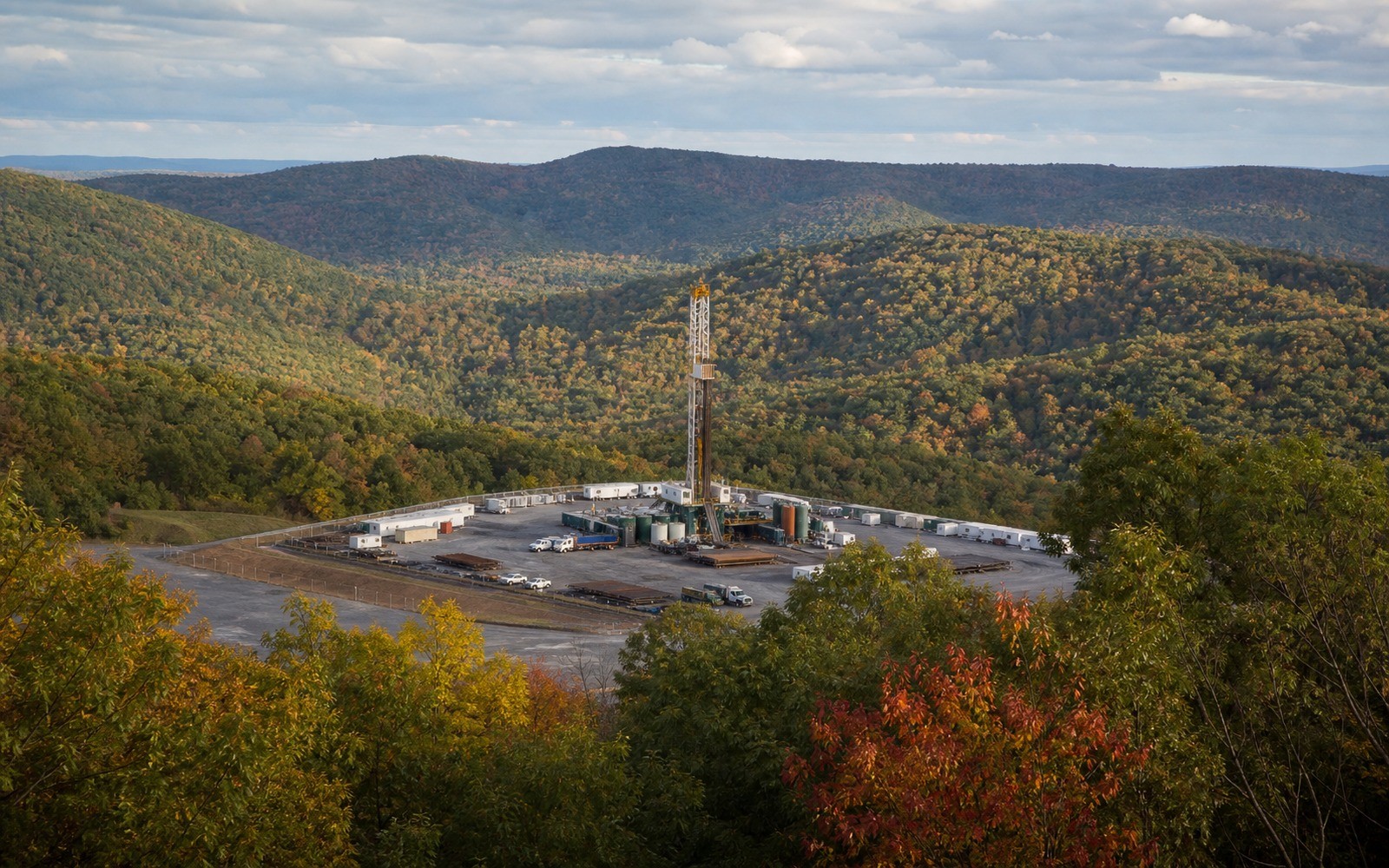
Marcellus Shale Mineral Rights
The Marcellus is the largest natural gas play in the country by volume, and its history has been shaped almost as much by pipeline capacity as by the rock itself.
The Marcellus Shale, spanning much of Pennsylvania and West Virginia's northern panhandle, holds an enormous resource base, but development has repeatedly been constrained by how much gas the region's pipeline network could actually move to market. Operators including EQT, the basin's largest producer following a series of consolidations, have at times curtailed production not because wells stopped performing, but because takeaway capacity was full.
That distinction matters for a mineral owner. A period of slower drilling activity or a temporarily curtailed well on your tract may say more about regional pipeline capacity than about the underlying quality of your minerals, which is a nuance worth understanding before comparing your offer to a neighbor's from a different year.
Why pipeline capacity has shaped this basin's history
The Marcellus grew faster than the pipeline infrastructure built to move its gas out of the region, which led to periods of below-market local pricing and, at times, curtailed production even from strong wells. Additional pipeline projects completed over the past decade have relieved some of that bottleneck, but takeaway capacity remains a live consideration in how operators pace development across different parts of the play.
A buyer who understands current takeaway conditions in your specific county is better positioned to explain why activity has been faster or slower on your tract than the basin's overall reputation might suggest.
Consolidation and operator scale
EQT's acquisitions over the past several years, including its purchase of major competing positions, have concentrated a large share of Marcellus production under fewer, larger operators. That consolidation generally means more predictable development pacing and payment practices for mineral owners, since large operators tend to plan multi-year drilling programs rather than working unit by unit opportunistically.
Dry gas core versus liquids-rich fringe
Most of the Marcellus is a dry gas play, but a liquids-rich window exists in parts of southwestern Pennsylvania and northern West Virginia, where wells produce natural gas liquids alongside methane. Liquids-rich production has historically carried stronger per-well economics than dry gas alone, so a mineral owner in that window should expect a different valuation basis than one in the dry gas core.
What a portfolio buyer weighs here
Given the basin's size, a firm building Appalachian exposure typically looks at current operator, takeaway capacity in the specific county, and whether the tract sits in the dry gas core or the liquids-rich window, rather than pricing the entire Marcellus as a single, uniform asset.
What to verify about your specific county
Takeaway capacity conditions differ enough county to county that a buyer should be able to speak to your specific area rather than the Marcellus broadly. Ask whether any wells near your tract have experienced curtailment in the past two years, and whether new pipeline capacity serving your area has come online recently, since both affect how confidently future production can be modeled.
Why local basis pricing matters here
Appalachian gas has at times traded at a discount to national benchmark pricing due to regional supply exceeding local pipeline capacity, a dynamic known as basis differential. That local pricing reality can mean your actual royalty check reflects a lower price than the Henry Hub number you might see quoted in the news, which is worth understanding when evaluating whether a buyer's projected cash flows for your interest are realistic.
Questions to Clear Before Closing
Each answer removes ambiguity from the property schedule, conveyance, curative list, funding condition, or delivery record.
Why would my Marcellus well have been curtailed even though it was producing well?
Pipeline takeaway capacity in parts of the Marcellus has at times been insufficient to move all available gas to market, leading operators to curtail some wells regardless of individual well performance.
Has pipeline capacity improved in recent years?
Several projects completed over the past decade have relieved some bottlenecks, though takeaway capacity remains an active planning consideration for operators in parts of the basin.
What is the difference between the dry gas core and the liquids-rich window?
Most of the Marcellus produces dry natural gas, but a liquids-rich window in southwestern Pennsylvania and northern West Virginia also produces natural gas liquids, which have historically supported stronger per-well economics.
Does EQT operate most Marcellus wells now?
EQT has become the basin's largest producer following a series of acquisitions, though many other operators, including smaller independents, remain active across different parts of the play.
Should I expect my Marcellus royalty to fluctuate with gas prices?
Yes, as a dry gas basin, Marcellus royalty income tracks natural gas prices, though local basis pricing and takeaway conditions in your specific county can cause it to diverge somewhat from national benchmark prices.
Is West Virginia Marcellus acreage valued differently than Pennsylvania acreage?
Development history, takeaway capacity, and operator activity differ enough between the two states that a buyer should evaluate each specifically rather than applying one regional figure.
Do all Marcellus leases include the same post-production cost deductions?
No, lease terms vary considerably by when and with whom they were signed, and post-production cost deductions for gathering, compression, and processing can meaningfully reduce net royalty; reviewing your specific lease language is worthwhile before evaluating any offer.
Clear the next closing condition
Owner, tract, fraction, lease, production, and exception records carry straight into these related closing reviews.
Want this checked against your deed, statements, lease, or written offer?
Send the county and state, owner name, operator or payor, recent statement, deed reference, lease, probate document, division order, or written offer you have.