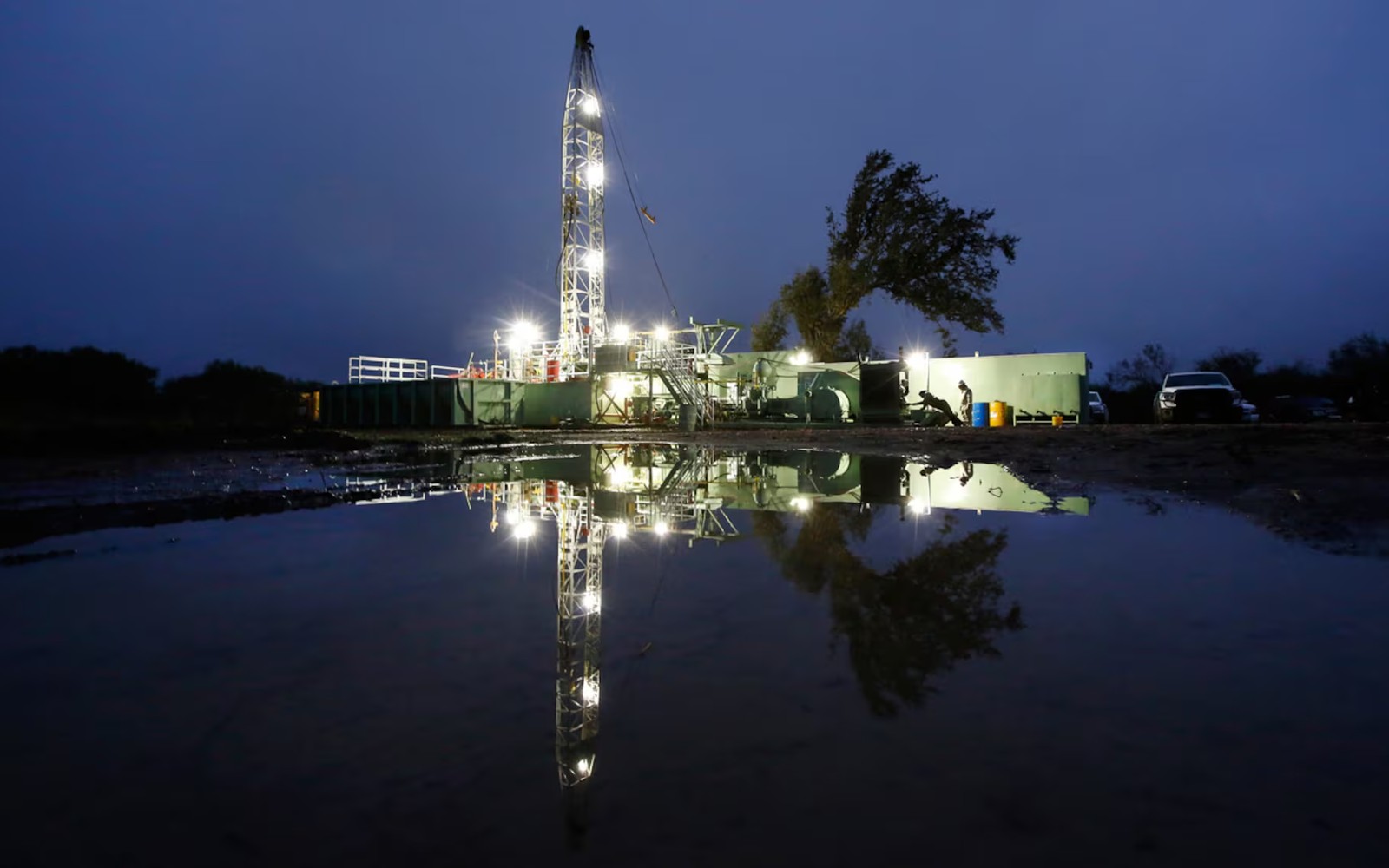
Haynesville Shale Mineral Rights
The Haynesville sits closer to Gulf Coast LNG export terminals than almost any other major gas basin, and that proximity is central to how institutional buyers think about it.
Spanning northwest Louisiana and northeast Texas across Caddo, DeSoto, Red River, and Panola counties, the Haynesville is a deep, high-pressure, high-temperature dry gas shale that requires more expensive drilling and completion than most plays, but delivers correspondingly strong well productivity. Its proximity to the growing LNG export corridor along the Gulf Coast has kept operator interest high even through periods of weak domestic gas pricing.
That LNG connection is a genuine structural tailwind, not marketing language: as export capacity along the coast continues to expand, gas produced in the Haynesville has a more direct path to global pricing than gas from basins further from the coast, and that dynamic factors into how institutional buyers model long-term demand for Haynesville production.
Why depth and pressure change the economics
Haynesville wells are drilled deeper and under higher pressure and temperature than most other major shale plays, which raises the cost per well considerably. In exchange, wells here can produce at very high initial rates, and the play has consistently attracted well-capitalized operators, including Chesapeake Energy, Comstock Resources, and Aethon Energy, willing to fund that higher upfront cost for the resulting well productivity.
For a mineral owner, that combination means Haynesville interests can be highly productive but also more sensitive to gas price swings than most plays, since the wells are expensive enough that operators pull back drilling more sharply when prices soften.
The LNG demand connection
Several major LNG export facilities have been built or are under construction along the Louisiana and Texas Gulf Coast, and the Haynesville is geographically positioned to feed that demand more directly than most other U.S. gas basins. As that export capacity continues to come online over the coming years, it represents a structural source of demand for Haynesville gas beyond the domestic market alone.
A buyer modeling long-term value for Haynesville minerals typically incorporates that export growth as a factor supporting sustained demand, while still hedging projections against the reality that gas prices remain cyclical and export buildout timelines can shift.
Operator concentration and what it means for your interest
The Haynesville is dominated by a relatively small number of well-capitalized operators compared to some other basins, which generally means more consistent development pacing and payment practices, but also means your leverage as an individual owner depends heavily on which operator holds your lease and how actively they are currently developing your specific unit.
What to check before accepting an offer
Given how directly Haynesville value is tied to gas price cycles, ask any buyer what price deck they are using to model future production, and whether that deck reflects a reasonable range rather than an optimistic single-point forecast. A buyer willing to walk through their assumptions is generally more trustworthy than one offering a number without explanation.
It is also worth confirming which specific operator holds your lease, since Aethon Energy, Comstock Resources, and Chesapeake Energy have each acquired or divested Haynesville acreage in recent years, and current operator activity in your unit matters more than historical drilling under a prior owner.
How pad development affects timing on your unit
Haynesville operators commonly develop multiple wells from a single pad in a coordinated program rather than one well at a time, which means your unit's timing depends heavily on where it falls in an operator's broader multi-well plan. A tract slated for a later phase of a pad program is not necessarily less valuable, but its near-term cash flow timeline looks different from a unit already in production, which a buyer should reflect in the offer.
Questions to Clear Before Closing
Each answer removes ambiguity from the property schedule, conveyance, curative list, funding condition, or delivery record.
Why is the Haynesville considered a stronger long-term gas basin?
Its proximity to Gulf Coast LNG export terminals gives Haynesville gas a more direct path to global demand than gas produced further from the coast, which supports sustained interest even during periods of weaker domestic pricing.
Are Haynesville wells more expensive to drill than other shale plays?
Yes. The play's depth, pressure, and temperature require more expensive drilling and completion, which is why it tends to attract well-capitalized operators and why drilling pace responds sharply to gas price changes.
Who are the main operators currently active in the Haynesville?
Chesapeake Energy, Comstock Resources, and Aethon Energy have been among the more active operators in recent years, though positions and activity levels shift with commodity prices and corporate strategy.
Does LNG export growth support higher gas prices?
No. LNG demand is a structural tailwind, but gas prices remain cyclical and sensitive to weather, storage levels, and broader supply growth, so any valuation should hedge projections rather than assume steady price increases.
Does the Haynesville produce any oil or natural gas liquids?
The play is overwhelmingly dry gas, with minimal associated liquids, so valuations should be based primarily on gas price exposure rather than oil market conditions.
Clear the next closing condition
Owner, tract, fraction, lease, production, and exception records carry straight into these related closing reviews.
Want this checked against your deed, statements, lease, or written offer?
Send the county and state, owner name, operator or payor, recent statement, deed reference, lease, probate document, division order, or written offer you have.