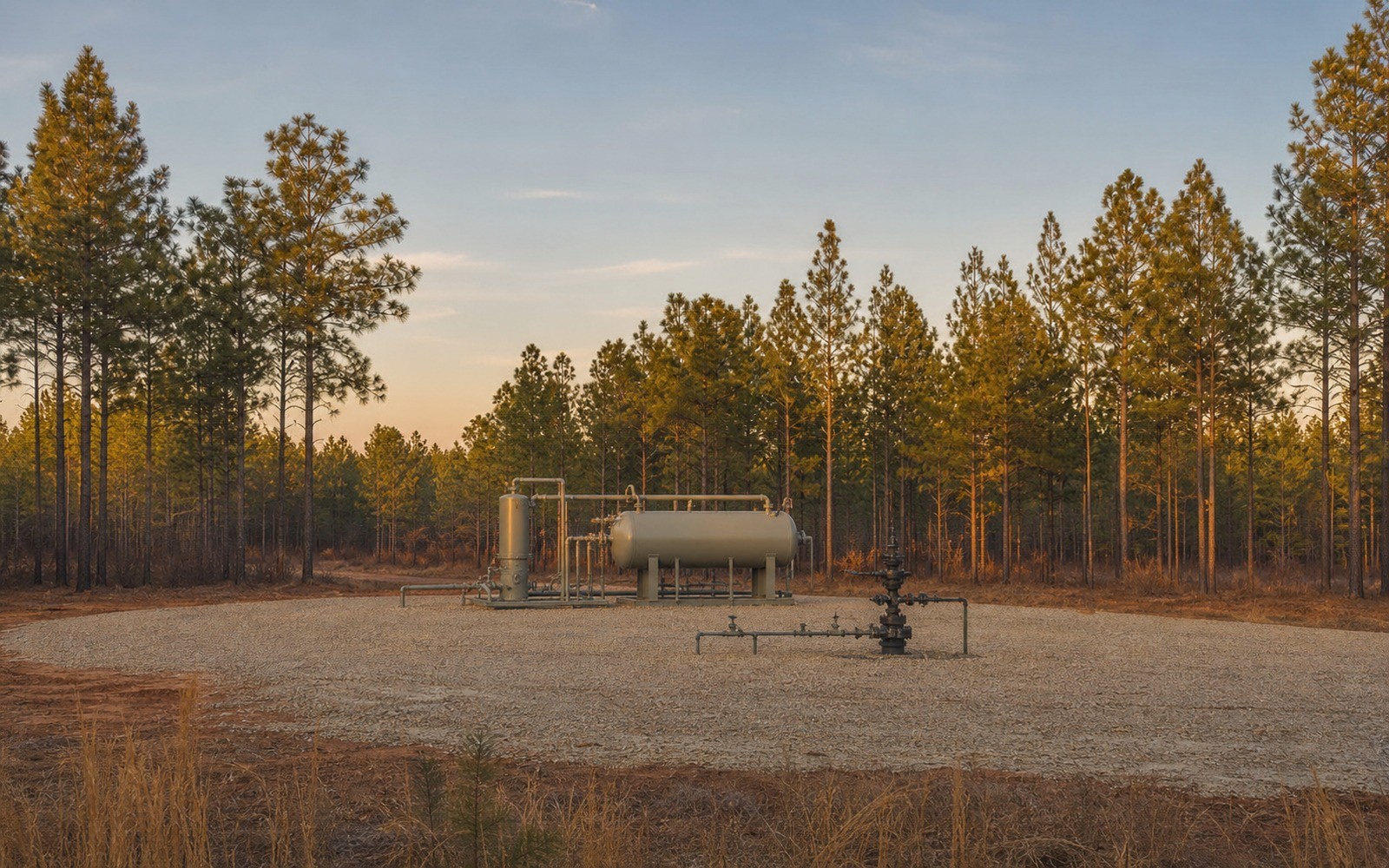
Smackover Formation Mineral Rights
The Smackover is one of the oldest producing formations in the region, and it is now at the center of a very different kind of resource story: lithium.
The Smackover Formation, a Jurassic-age carbonate reservoir underlying parts of southern Arkansas and northern Louisiana, has produced oil since the 1920s, making it one of the longest-producing formations in the region. For most of its history, valuing a Smackover mineral interest meant evaluating conventional oil production and its long, mature decline. That is still true, but it is no longer the whole story.
In recent years, the same brine that has long been a byproduct of Smackover oil production has drawn serious interest for its lithium content, with companies including Standard Lithium and ExxonMobil pursuing direct lithium extraction projects in southern Arkansas specifically because of the brine's mineral composition. That development introduces a resource dimension to Smackover ownership that most legacy oil and gas interests do not have.
A century of conventional oil production
Smackover oil production has been a steady, if mature, part of the region's economy for a century, with many wells now producing at low, stable rates typical of a formation this old. A mineral owner's baseline valuation should reflect that long-lived, gradually declining production, similar in character to other century-old conventional formations around the country.
The lithium brine development
Direct lithium extraction technology, which pulls lithium from brine without the evaporation ponds traditional lithium production requires, has made the Smackover's bromine-rich, lithium-bearing brine commercially interesting for the first time. Several companies have announced projects in southern Arkansas specifically targeting this resource, and depending on how mineral and royalty rights are defined in your specific deed, that brine resource may or may not be included in what you own.
This is genuinely new territory for the region, and ownership questions around brine and lithium rights, separate from oil and gas rights, are still being worked out in some cases. An owner should have any deed reviewed carefully before assuming brine rights are automatically included or excluded.
What this means for how your interest should be valued
A responsible valuation treats conventional Smackover oil production and any potential brine or lithium interest as two separate questions, since the parties actively developing lithium projects, the timeline for that development, and the specific mineral rights language in your deed are all still evolving. Any offer that blends the two into one confident number without addressing that uncertainty should be looked at skeptically.
What an owner should ask before signing anything
If you are approached about a lithium or brine lease separate from your existing oil and gas lease, have both reviewed together by someone familiar with mineral law in your state, since overlapping rights and priority of use between oil production and brine extraction are still being worked out in some areas and can affect how each resource gets valued.
Why patience matters on the lithium side specifically
Direct lithium extraction projects in the region are still moving through permitting, pilot testing, and early construction phases, and commercial-scale production timelines remain uncertain. An owner hoping to capture near-term value tied specifically to lithium potential should understand that this is a multi-year story still unfolding, not a resource that is already generating royalty income today in most cases.
How a deed's original drafting language decides the brine question
Deeds written decades ago, when oil was the only resource anyone had in mind, often describe rights in terms that predate any thought of lithium extraction, which means the answer to who owns the brine can turn on how broadly or narrowly that original language was drafted rather than on anything in current law. Some deeds convey all minerals in the broadest sense; others list oil and gas specifically in a way that a court could read more narrowly.
An owner should not assume either outcome. Having the actual deed language reviewed by counsel familiar with this specific question, rather than relying on a general assumption about what 'mineral rights' typically includes, is the only reliable way to know where you stand before any brine-related lease or sale discussion.
Questions to Clear Before Closing
Each answer removes ambiguity from the property schedule, conveyance, curative list, funding condition, or delivery record.
Does owning Smackover minerals mean I also own lithium brine rights?
It depends on the specific language in your deed. Mineral and royalty rights language varies, and brine or lithium rights are not automatically included in every conventional oil and gas mineral interest, so a careful title review matters here.
Why is there sudden interest in Smackover brine?
New direct lithium extraction technology has made it commercially viable to pull lithium from the bromine-rich brine associated with Smackover oil production, drawing companies including Standard Lithium and ExxonMobil to pursue projects in southern Arkansas.
Is Smackover oil production still active?
Yes, though most of it is mature, long-lived production from a century-old formation rather than new drilling; valuations should reflect that established, gradually declining profile.
Should I get separate valuations for oil rights and any lithium potential?
That is a reasonable approach given how early and evolving lithium development in the Smackover still is; treating the two as one blended number can obscure real uncertainty in the lithium side specifically.
Which states have the most active Smackover lithium projects currently?
Southern Arkansas has seen the most concentrated project announcements to date, with companies pursuing direct lithium extraction facilities tied to the formation's brine.
Is Smackover oil production concentrated in Arkansas or Louisiana specifically?
Production exists on both sides of the state line, with historically significant activity in both southern Arkansas and northern Louisiana; current lithium brine interest has so far been concentrated more heavily on the Arkansas side of the formation.
My deed is decades old. Does it automatically cover lithium in the brine?
Not necessarily. Older deeds were written before lithium extraction was a consideration, and how broadly or narrowly the mineral language was drafted can determine the answer, so a specific legal review of your deed language is the only reliable way to know.
Clear the next closing condition
Owner, tract, fraction, lease, production, and exception records carry straight into these related closing reviews.
Want this checked against your deed, statements, lease, or written offer?
Send the county and state, owner name, operator or payor, recent statement, deed reference, lease, probate document, division order, or written offer you have.